

Prosperity
Prosperity
This painting captures a moment that meant far more than a simple change of address. It reflects the triumph and tenderness of a Black family stepping into their first home in 1960s suburban America—a milestone that carried the weight of generations and the quiet defiance of a people determined to claim their place in a country that often denied them space.
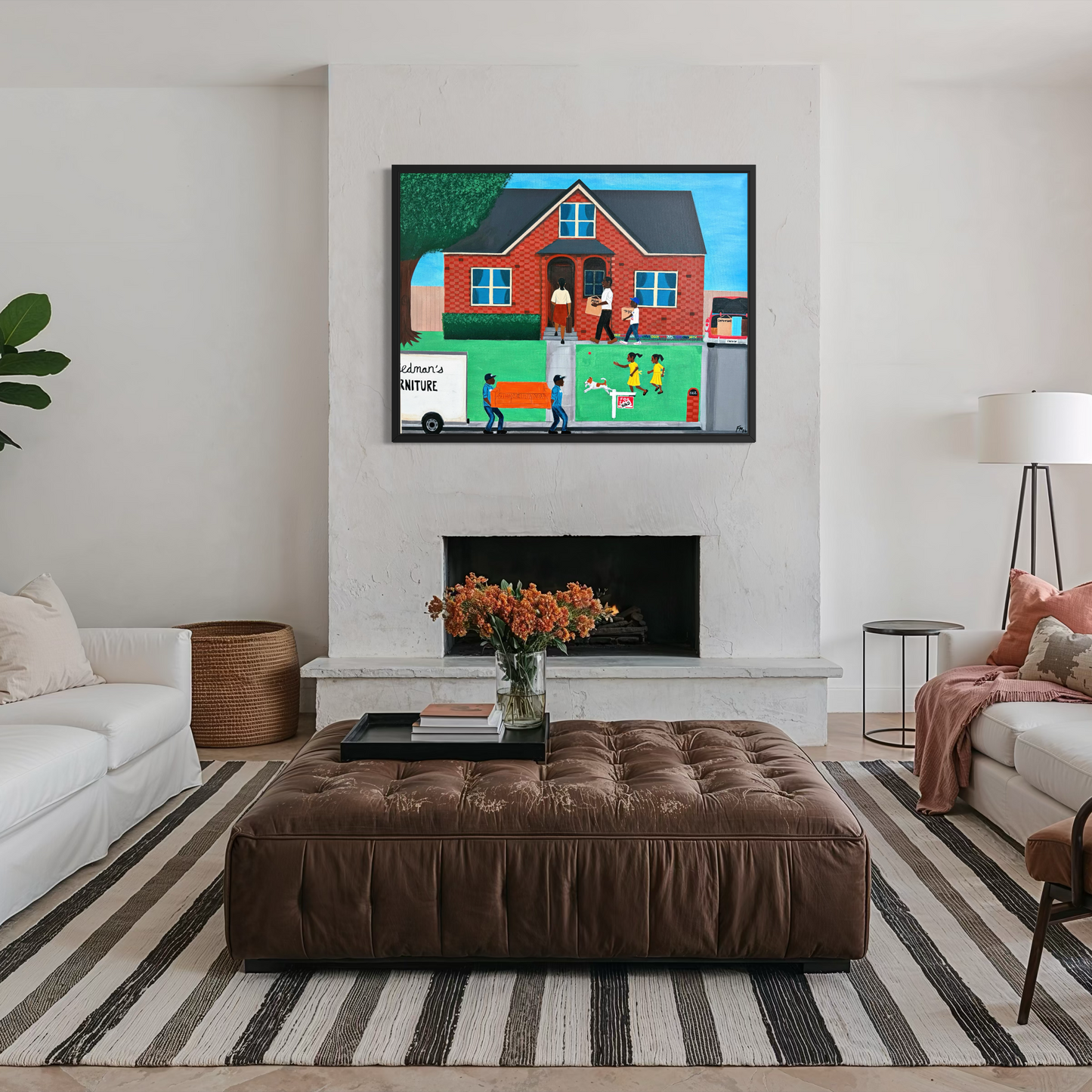
The scene radiates movement and hope: children laughing in the yard, a dog chasing a red ball, movers carrying a bright orange couch toward the doorway, and a family walking up the steps with boxes marked “MOM” and “TOYS.” A red car sits in the driveway with its trunk open, signaling the final stretch of a long journey. The “FOR SALE” sign, now boldly stamped “SOLD,” stands as a symbol of victory—hard‑won, deeply felt.
Yet beneath the warmth of the moment lies the historical truth that makes this scene so powerful. In the 1960s, Black families faced extraordinary barriers to homeownership. Banks routinely denied mortgages or offered predatory contracts designed to strip families of equity. Real estate agents steered Black buyers away from white neighborhoods, and restrictive covenants—sometimes written, sometimes enforced through intimidation—worked to keep suburbs segregated. Even when a Black family managed to purchase a home, they often entered communities where neighbors questioned their presence, property values were weaponized against them, and safety was never guaranteed.
Against that backdrop, this painting becomes more than a depiction of a move‑in day. It becomes a portrait of resilience. The family’s steps toward the front door echo the footsteps of ancestors who dreamed of stability but were denied it. Their joy is not naïve—it is courageous. Their presence on this lawn, in this neighborhood, in this moment, is a quiet revolution.
“Prosperity” honors the families who pushed through closed doors and carved out futures in places they were never meant to reach. It celebrates the dignity of claiming home, the beauty of belonging, and the enduring strength of Black aspiration in the face of systemic resistance.
Couldn't load pickup availability
This painting captures a moment that meant far more than a simple change of address. It reflects the triumph and tenderness of a Black family stepping into their first home in 1960s suburban America—a milestone that carried the weight of generations and the quiet defiance of a people determined to claim their place in a country that often denied them space.
The scene radiates movement and hope: children laughing in the yard, a dog chasing a red ball, movers carrying a bright orange couch toward the doorway, and a family walking up the steps with boxes marked “MOM” and “TOYS.” A red car sits in the driveway with its trunk open, signaling the final stretch of a long journey. The “FOR SALE” sign, now boldly stamped “SOLD,” stands as a symbol of victory—hard‑won, deeply felt.
Yet beneath the warmth of the moment lies the historical truth that makes this scene so powerful. In the 1960s, Black families faced extraordinary barriers to homeownership. Banks routinely denied mortgages or offered predatory contracts designed to strip families of equity. Real estate agents steered Black buyers away from white neighborhoods, and restrictive covenants—sometimes written, sometimes enforced through intimidation—worked to keep suburbs segregated. Even when a Black family managed to purchase a home, they often entered communities where neighbors questioned their presence, property values were weaponized against them, and safety was never guaranteed.
Against that backdrop, this painting becomes more than a depiction of a move‑in day. It becomes a portrait of resilience. The family’s steps toward the front door echo the footsteps of ancestors who dreamed of stability but were denied it. Their joy is not naïve—it is courageous. Their presence on this lawn, in this neighborhood, in this moment, is a quiet revolution.
“Prosperity” honors the families who pushed through closed doors and carved out futures in places they were never meant to reach. It celebrates the dignity of claiming home, the beauty of belonging, and the enduring strength of Black aspiration in the face of systemic resistance.